Sanex TV advertisement banned over racial stereotype case
The ASA and the Committee of Advertising Practice (CAP) emphasize that ads should be created with a strong sense of responsibility to both audiences and society, carefully avoiding portrayals that imply one race or ethnicity is inferior or problematic.
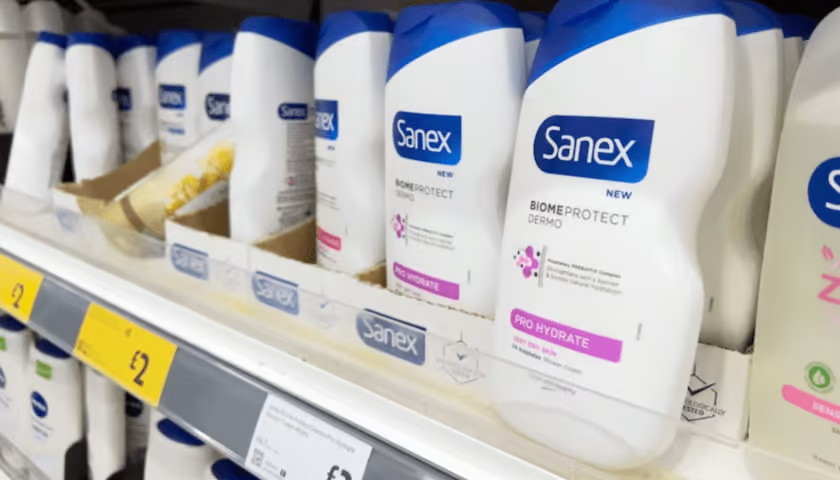
UK – The TV advertisement for Sanex shower gel has been banned in the UK by the Advertising Standards Authority (ASA) due to its portrayal of Black skin as “cracked,” “dry,” and “itchy.”
In contrast, White skin was shown as smooth, hydrated, and problem-free after using the product.
The ad featured Black models whose skin appeared visibly problematic, covered in red scratch marks and a cracked, clay-like substance, contrasted with a White model shown showering with clear, smooth skin.
The ASA ruled that the ad’s use of different skin colours to depict a “before and after” scenario created a problematic and offensive racial stereotype.
It conveyed a message, whether intentional or not, that Black skin was problematic and uncomfortable, while White skin was superior and free from issues.
This juxtaposition reinforced a harmful racial stereotype, which the regulator found likely to cause serious offence.
The watchdog has therefore banned the commercial from being aired again in its current form.
Colgate-Palmolive, the owner of the Sanex brand, defended the advertisement, stating that the intention was to show the product’s efficacy across all skin types and that the use of diverse models was meant to demonstrate inclusivity, not racial comparison.
Clearcast, the UK organization responsible for approving TV ads, also supported that the ad was intended to reflect product inclusivity rather than racial stereotyping.
However, the ASA emphasized that despite the lack of malicious intent, the ad’s execution structured a harmful narrative linking Black skin with unfavourable conditions and White skin with positive results.
The ASA instructed Colgate-Palmolive to avoid causing serious offence on grounds of race in future advertisements.
These ASA decisions illustrating harms from “before and after” skin-tone framing include rulings where ads portrayed models in ways that exploited insecurities or created unrealistic pressure to conform to certain body or skin ideals.
According to ASA, brands can avoid repeat rulings like the Sanex case by ensuring their advertisements do not perpetuate harmful racial or ethnic stereotypes likely to cause serious or widespread offence.
Advertisers are encouraged to review the full context and impact of their ads, including diverse and inclusive representation without reinforcing negative stereotypes, and seek regulatory guidance or test ads with diverse groups before release.
Sign up to receive our email newsletters with the latest news updates and insights from Africa and the World HERE.