
SPF transitions from summer essential to year-round skincare, report shows
Demand remains strongly seasonal, with May and June marking the peak buying months for sun protection.
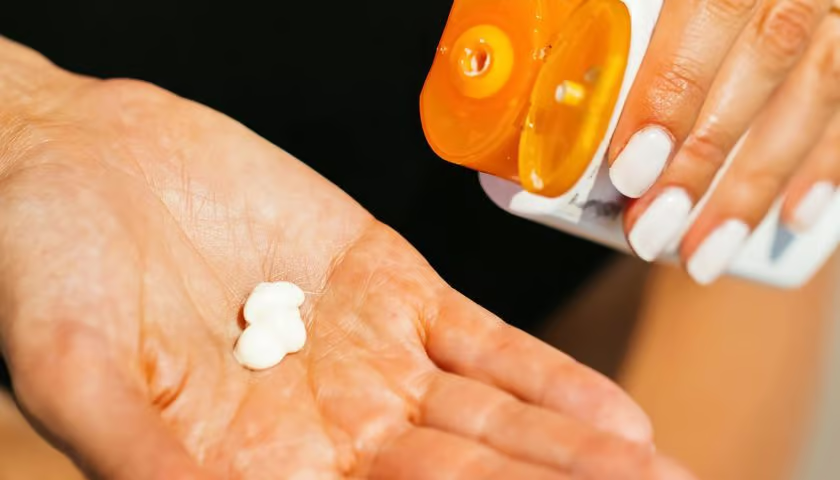
GLOBAL – According to a report by Circana, data shows that sunscreen and SPF are steadily moving beyond their old role as summer holiday essentials and becoming part of everyday skincare and wellness routines worldwide.
Circana’s Larissa Jensen said demand is now being shaped less by sunshine and weather and more by preventative skincare habits, wellness culture, and rising awareness of the cumulative effects of daily UV exposure, even in colder or cloudier months.
While seasonality still affects purchases, the overall trend suggests SPF is becoming a permanent part of consumers’ daily routines rather than a reactive summer buy.
Growing concern about skin cancer, skin health, and premature ageing is also reinforcing sun protection as an everyday skincare priority, with dermatologist advice, changing routines, and social media all helping to normalize year-round use.
In Australia, where skin cancer rates are the highest in the world, suncare sales have climbed by nearly 60% over the past four summers.
Unit sales rose much more slowly, by 18%, suggesting shoppers are buying higher-priced products and smaller pack sizes as the category premiumizes under inflationary pressure.
Looking ahead, growth is expected to come from product innovation, regulated sun protection formats, premium offerings, and smarter pricing as consumers become more selective about what they buy.
Across Circana’s major European markets, the total retail sun care category is worth about USD 1.8 billion and has grown 11.6% year on year in recent months.
Prestige in-sun SPF products in the UK and Europe grew 20% in the first quarter of 2026, even though that period is typically the least sunny, highlighting stronger demand for premium sun protection throughout the year.
In EMEA, dermatologist messaging, public health campaigns, and social media are helping to make daily SPF use more routine, especially among younger and skincare-focused consumers, while the rise of K-beauty and hybrid skincare is accelerating innovation in facial SPF.
In the U.S., sun care reached USD 2.7 billion in the 12 months to March 2026, up 6% year on year.
Mid-range, or masstige, SPF brands outperformed the mass market, growing 23% in value sales to USD 323 million, while average annual spending per buyer increased to USD 44.24.
Mass retail remains the leading sales channel, followed by e-commerce, drug stores, beauty speciality retailers, and grocery stores, while prestige sun care also stayed strong at USD 774.9 million, up 11%.
Consumers are becoming more ingredient-conscious, too, with mineral-based sun care growing faster than chemical sunscreen.
In Latin America, sun protection generated USD 76 million in sales in the 12 months to March 2026, equal to 9% of total skincare sales and up 11% year on year.
Mid-range and mass-market brands still lead the category, with Korean and Japanese beauty brands helping drive growth, while e-commerce dominates, accounting for nearly three-quarters of sales and expanding five times faster than physical retail.
Even so, the category remains highly seasonal, with 47% of sales still concentrated in the summer months.
In Brazil, mid-range and mass brands accounted for most sales, while prestige grew fastest, partly supported by Asian beauty labels.
In China, prestige suncare generated USD287 million in e-commerce sales in 2025, representing 3% of the broader prestige skincare market. Although that share is still modest, suncare was the fastest-growing prestige skincare segment, with sales rising 32% year on year.
Sign up to receive our email newsletters with the latest news updates and insights from Africa and the World HERE.