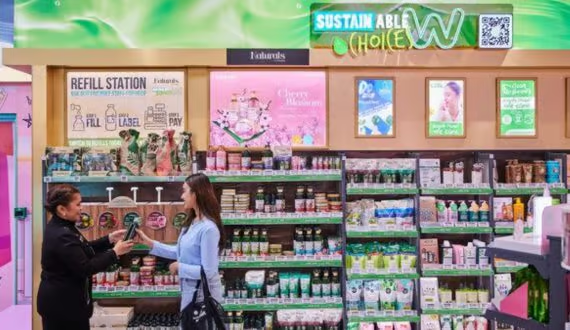
Brazil moves toward circular beauty with new Anvisa repackaging proposals
Specific technical standards ensure traceability, safety, and efficacy when packaging reuse is allowed.

BRAZIL – Brazil’s National Health Surveillance Agency (Anvisa) has launched two public consultations to gather stakeholder input on best practices for repackaging personal hygiene products, cosmetics, and perfumes, including potential packaging reuse.
These initiatives, numbered 1380 and 1381, opened on January 20, 2026, and seek to modernize regulations for direct-to-consumer sales.
The proposals define technical requirements and Good Manufacturing Practices (GMP) for repackaging operations, such as portioning products into smaller units.
They also specify eligible product categories and outline conditions for reusing packaging where feasible, aiming to expand current rules while upholding quality standards.
Contributions from citizens, companies, associations, and health professionals are invited via online forms until March 21, 2026.
Guidelines cover responsibilities for marketing authorization holders and repackaging facilities, including documentation, staff training, infrastructure, equipment maintenance, and sanitation protocols.
Additional provisions address handling defective products, managing complaints, processing returns and recalls, and implementing cosmetovigilance to monitor adverse events.
These updates directly affect society and Brazil’s National Health Surveillance System (SNVS) by broadening repackaging eligibility and introducing reuse options under strict controls.
Anvisa emphasizes that the measures guarantee consumer-facing products meet rigorous quality benchmarks, reflecting ongoing efforts to balance innovation with public health protections in the cosmetics sector.
Meanwhile, late last year, Brazilian law took a significant regulatory step by exempting artisanal cosmetics, personal hygiene products, and perfumes from mandatory registration with the Brazilian Food and Drug Agency (ANVISA).
This exemption is established under Law No. 15.154/2025, which was enacted on July 1, 2025, and is set to take effect on August 30, 2025.
The law specifically targets handmade or artisanal products, aiming to reduce bureaucratic hurdles for small producers and individual entrepreneurs in the sector.
According to a report by Mordor Intelligence, Brazil’s beauty and personal care market is valued at nearly USD 39.6 billion in 2026 and is projected to reach more than USD 56.1 billion by 2031, growing at a CAGR of 7.2%.
This expansion is fueled by rising disposable incomes, a strong cultural emphasis on grooming, and increasing demand for premium and sustainable products.
Sign up to receive our email newsletters with the latest news updates and insights from Africa and the World HERE.