
European Commission rejects call to reduce VAT on sun creams
The practical benefit of faster innovation may be limited if price continues to keep sunscreen out of reach for many consumers.
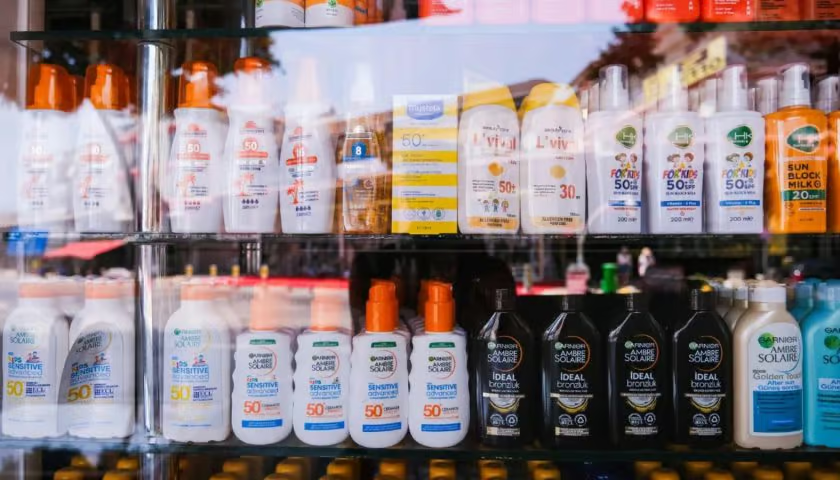
EUROPE – The European Commission has ruled out cutting VAT on sun creams, saying the products remain cosmetics rather than pharmaceutical goods and therefore do not qualify for reduced tax treatment under EU rules.
The decision came after Irish MEP Billy Kelleher pressed the Commission to reconsider the classification, arguing that sunscreen should be treated more like a preventive health product because of Europe’s rising skin cancer burden.
In his question, Kelleher pointed to data from the European Cancer Information System showing that melanoma cases and deaths are increasing across Europe, and he noted that skin cancer is now the fourth most common cancer in the EU.
He asked whether sun cream could be added to the list of products eligible for reduced VAT rates, given that it is currently taxed as a cosmetic product at a minimum rate of 15%.
The Commission’s response, delivered on 16 July, said the EU’s VAT rules only allow reduced rates for pharmaceutical products used for medical and veterinary purposes, which does not include sunscreen.
Wopke Hoekstra, replying for the Commission, said the 2022 VAT reform was the result of a difficult political compromise and that the Commission does not plan to propose further amendments on the issue.
He also said reduced VAT rates tend to have limited price effects because retailers are not required to pass the savings directly to shoppers.
The debate over sunscreen affordability comes as consumer concern grows.
Industry and public health voices argue that high prices are discouraging daily use, even though sun protection is increasingly seen as a preventive tool rather than a luxury.
In that context, the question is not only whether sunscreen should receive tax relief, but how Europe can make effective sun protection more accessible without undermining its current regulatory advantages.
There is also a broader regulatory contrast with the United States.
The EU’s cosmetic classification has helped bring newer UV filters to market more quickly, while the US drug-style system has been slower to approve new sunscreen actives.
Last month, the US Food and Drug Administration approved bemotrizinol, the first new sunscreen active ingredient the agency has allowed since 1999, marking a rare step forward after years of slow progress on UV protection.
The approval also underscored a broader contrast between the US and Europe: while the American system has moved cautiously, the European regulatory model has generally allowed newer sunscreen filters to reach the market more quickly.
Sign up to receive our email newsletters with the latest news updates and insights from Africa and the World HERE.

