Beiersdorf bets big on nivea turnaround as skincare market slows
While Eucerin and Aquaphor continue to deliver strong growth, Nivea’s 6.8% sales decline has exposed the need for a sharper local-market strategy, stronger consumer engagement and renewed brand momentum.
GERMANY – Beiersdorf is stepping up efforts to revive its flagship Nivea brand after weaker-than-expected performance in the first half of 2026 forced the German beauty group to cut its full-year sales outlook.
The cosmetics and personal care manufacturer announced on August 3 that it now expects low-single-digit organic sales decline in 2026, revising its earlier forecast of flat to slightly growing organic sales.
The downgrade reflects continued pressure across the global skincare market, alongside weaker consumer confidence and higher production costs linked partly to the Middle East crisis.
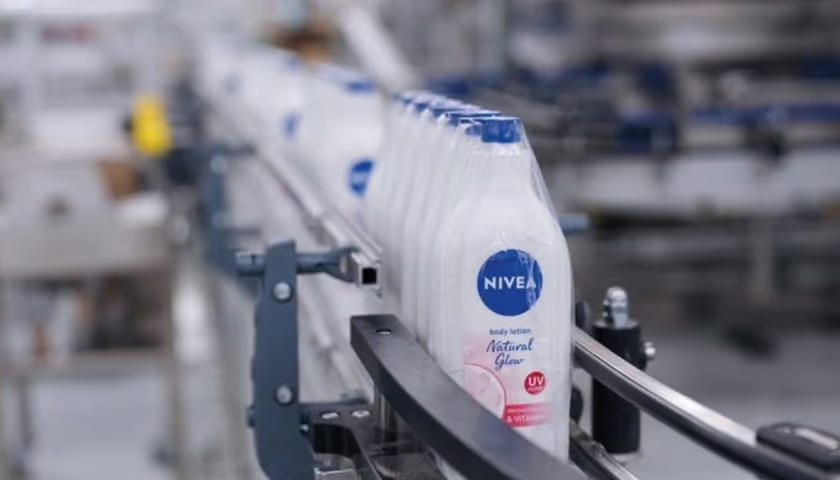
Nivea remains the biggest challenge within the group’s consumer portfolio. Sales fell 6.8% in the first half, contrasting sharply with the performance of Beiersdorf’s Derma business, which includes Eucerin and Aquaphor.
Derma delivered 7.8% organic sales growth, supported by product innovation and expansion into new consumer and market segments.
An 18-month push for Nivea
In response, Beiersdorf is accelerating its Nivea turnaround strategy, with the company planning to increase investment in consumer-facing activities over the next 18 months.
The strategy will focus on strengthening Nivea’s competitiveness across categories, markets and consumer segments, with greater emphasis on local market penetration and initiatives designed to restore brand momentum.
Beiersdorf CEO Vincent Warnery said the first half demonstrated both the resilience of parts of the company’s portfolio and the need for decisive action at Nivea.
The company expects the increased investment to put additional pressure on profitability in 2026, particularly as manufacturing costs continue to rise.
The challenges were evident in the second quarter, when organic sales in Beiersdorf’s Consumer business declined 3.3%, contributing to a 2.3% decline at group level.
Beiersdorf’s performance reflects broader pressures facing the global beauty and personal care industry, where consumers are becoming increasingly selective while companies face higher costs and changing purchasing patterns.
At the same time, premium skincare and science-led brands continue to offer opportunities for growth.
Beiersdorf’s Derma performance demonstrates the importance of targeted innovation and positioning within specialised skincare categories.
The company is therefore balancing defensive measures around Nivea with continued investment in growth areas across its portfolio.
Despite lowering its 2026 expectations, Beiersdorf has maintained its longer-term ambition to return to growth in 2027, followed by improved profitability from 2028.
The Nivea turnaround will be closely watched across the beauty industry, given the brand’s global scale and importance to Beiersdorf’s consumer business.
Sign up to receive our email newsletters with the latest news updates and insights from Africa and the World HERE.