Dyson, Usmile unveil AI toothbrushes with built-in cameras
Brands are targeting a long-underdeveloped market, while consumers increasingly expect gentler ingredients, smarter devices, and more engaging products.
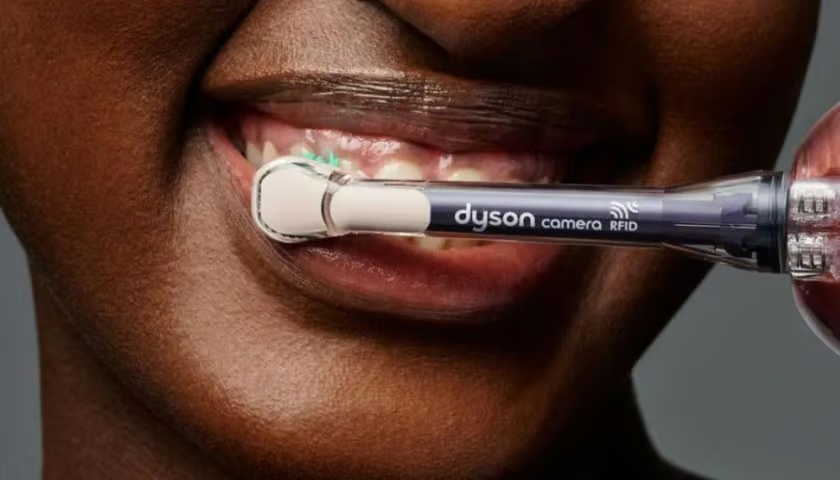
USA – Dyson and Usmile have unveiled AI-assisted electric toothbrushes with built-in cameras, marking a major push to make daily oral care more visible, precise, and personalised.
The launches come as the once-stagnant oral care industry attracts renewed interest through “tooth tech,” “free-from” formulations, and Gen Z-oriented flavours and packaging.
Dyson’s CameraJet is positioned as the only toothbrush combining a camera with a jet. Developed over six years, it identifies gaps between teeth and enables precision flossing during brushing.
The device uses Gap Optical Targeting, an AI machine-learning system that scans 28 live images per second to detect, track, and predict spaces between teeth in real time. Its variable sonic oscillation keeps bristles moving, while a conical jet aims to remove more plaque with less impact on gums and enamel.
The CameraJet also includes an “anti-gravity tank” that adjusts during use to deliver controlled jets from any direction.
With Wi-Fi and Bluetooth connectivity, its integrated camera functions as an endoscope, letting users view their teeth in real time through the MyDyson app.
Founder and chief engineer James Dyson said the company had spent more than a decade studying oral care routines and how harmful buildup develops in the mouth.
He described the product as a new way to maintain oral health by combining imaging, machine learning, precision fluid dynamics, brushing technology, and connectivity.
A day after Dyson’s launch, Usmile introduced the D50 OralCam Toothbrush as part of its AI-enabled D Series oral care system.
The platform combines OralCam imaging with AI-driven brushing recommendations, offering plaque visualisation, targeted cleaning, and long-term hygiene tracking
Usmile positions the system as a shift from “blind brushing and motion-based tracking” to visible, actionable daily care.
The D-lite OralCam is designed to give users a fuller view of the mouth, including inner surfaces, back teeth, and areas that are hard to inspect in a mirror.
The company acknowledges the difficulty of imaging the mouth because it is wet, reflective, narrow, and constantly moving.
It says it has addressed these challenges through optical engineering, guided image capture, tooth-level recognition, motion sensing, sealed hardware, and consumer-friendly software.
Beyond AI toothbrushes, brands are responding to sensitivity concerns by removing potentially irritating ingredients from oral care products.
Kenvue-owned Listerine has launched an alcohol-free and peroxide-free whitening mouthwash designed to freshen breath and whiten teeth without causing sensitivity.
The launch reflects growing demand for gentle, “free-from” products, in line with the broader clean-beauty trend.
Listerine also emphasises consumer awareness and habit formation, saying that brushing, flossing, and rinsing together form an essential three-step routine for preventing oral disease.
It notes that global oral disease cases rose by more than 3% over four years to 3.73 billion, a rate still too slow to meet the World Health Organization’s 2030 universal oral health access target.
Sign up to receive our email newsletters with the latest news updates and insights from Africa and the World HERE.