
Algiecel opens microalgae plant for fish-free beauty ingredients
The expansion comes amid pressure on global fish oil supplies from overfishing, biodiversity loss and the developing 2026–2027 El Niño event.
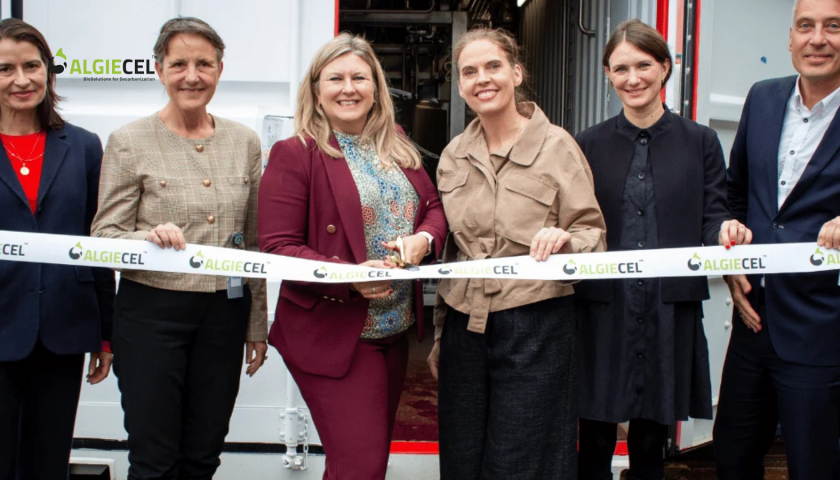
DENMARK – Algiecel has opened a new microalgae production facility in Kalundborg, Denmark, as demand for alternatives to fish-derived cosmetic ingredients grows.
The site increases the company’s marine-ingredient production capacity nearly fivefold and marks its move from pilot testing toward industrial-scale supply made independently of fish-dependent supply chains.
Fish oil is used in personal-care products for its moisturizing and skin-barrier benefits. Algiecel says supply volatility is increasing interest in marine ingredients that don’t rely on ocean conditions.
The company reports that, by early June 2026, cumulative fish oil supply across leading production regions was about 31% below the same point in 2025, citing the International Fishmeal and Fish Oil Organization.
El Niño, a climate pattern that warms surface waters in the central and eastern Pacific, has historically contributed to sharp increases in fish oil prices.
Ricardo Daura Garcia, Algiecel’s chief commercial officer, said sourcing ingredients from fisheries can risk marine ecosystems, biodiversity, and coastal communities.
He added that the company’s new facility is intended to reduce reliance on increasingly constrained natural resources.
The Kalundborg facility grows Nannochloropsis oceanica in compact, modular photobioreactors using artificial light, water and captured carbon dioxide.
The new reactor has a total volume of 5,500 litres, of which 3,240 litres are used for active cultivation, up from 700 litres in Algiecel’s pilot system. The company says this raises capacity almost fivefold.
The reactor connects directly to the carbon dioxide supply of an operating biogas plant on the same site.
Daura Garcia said this demonstrates that the process can use real industrial inputs, rather than relying only on laboratory conditions.
The system is designed to expand by adding identical modular units, avoiding the need to redesign a single, larger reactor as output grows.
Algiecel views the Kalundborg site as a model for a future commercial facility, using the validated design as a foundation and allowing additional capacity to be added in response to customer demand.
The company expects to produce 12 tonnes of biomass annually from 2027 for cosmetics and pet food, moving from sample-scale output to regular commercial supply.
Algiecel also points to growth in the omega-3 market as an indication of rising demand for alternative marine ingredients.
The company estimates that the global market was worth about USD 3.3 billion in 2026 and could reach USD 5.4 billion by 2033.
The global fishmeal and fish oil production has remained broadly flat for more than two decades, constrained by catch limits and the capacity of wild fish stocks, while fish oil prices have risen.
Peru, which typically supplies about 20% of the world’s fishmeal and fish oil, set its lowest anchovy quota in a decade in 2026 and then ended its main fishing season early, leaving more than one million tonnes uncaught, according to Daura Garcia.
These supply disruptions can hit personal-care manufacturers particularly hard, he added, because they generally purchase smaller volumes than sectors such as human and pet nutrition or aquafeed.
Sign up to receive our email newsletters with the latest news updates and insights from Africa and the World HERE.