Unilever gets 3-month extension to change Sunlight Platinum packaging
The June 2026 ruling found Unilever’s “100% plant-based actives” front-of-pack claim breached Clause 4.2.1 of the Advertising Code’s Section II, which addresses misleading advertising.
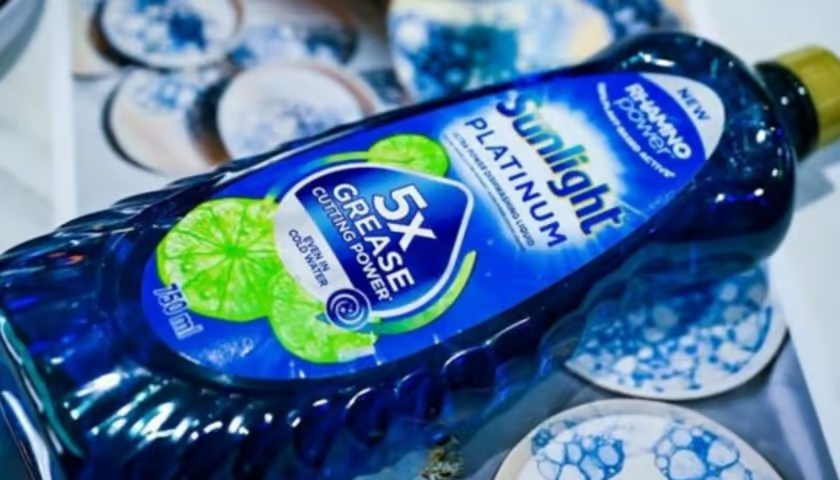
SOUTH AFRICA – South Africa’s Advertising Regulatory Board has granted Unilever a three-month extension until December 2026 to amend the packaging of its Sunlight dishwashing liquid range after ruling that the “100% plant-based actives” claim on the front label was misleading to consumers.
The original ruling, issued in June 2026, found that Unilever’s front-of-pack claim that the product contained “100% plant-based actives” contravened Clause 4.2.1 of Section II of the Code of Advertising Practice, which deals with misleading claims.
While the front of the packaging stated “100% plant-based actives”, the back disclosed in smaller print that the product also contained “other non-plant-based additives”.
Unilever had argued the claim referred specifically to rhamnolipids, a 100% plant-based active ingredient included in the product’s mix of active ingredients, but the Directorate found this interpretation was not sufficiently clear to consumers.
Packaging Changes Across Multiple Formats
The claim appears across Unilever’s wider Sunlight dishwashing liquid range, meaning the change needs to be implemented across several pack sizes including 200ml, 400ml, 750ml and 1.5L formats.
Unilever told the Directorate that revised artwork had already been finalised and supplied as evidence of corrective steps taken, but additional lead time was needed to produce and apply new labels across the different packaging formats.
The company warned that refusing the extension could result in significant revenue losses because Sunlight dishwashing liquid is a key product in its portfolio.
The complainant was given an opportunity to respond but did not object.
Regulatory Context and Greenwashing Scrutiny
The ARB stressed that granting the extension should not be interpreted as approval of the proposed new packaging, with the Directorate stating it cannot pre-clear advertising amendments and would not comment on whether Unilever’s proposed changes adequately address the concerns raised in the original ruling.
The case highlights the increasing scrutiny of greenwashing claims on packaging, particularly in the consumer goods sector, where regulators are clamping down on vague or unsubstantiated environmental claims.
Unilever has previously faced criticism over its sustainability marketing, including a 2024 ASA ruling against its “carbon-neutral” claims for Persil and a 2023 CMA investigation into its “green” claims that led to a commitment to improve the substantiation of its environmental marketing.
Sign up to receive our email newsletters with the latest news updates and insights from Africa and the World HERE.