
ELC to retain and restructure Too Faced, Smashbox, and Dr. Jart+
All three brands were acquired during ELC’s major acquisition wave in the 2010s but have faced underperformance amid broader declines in the company’s makeup and skin-care segments.
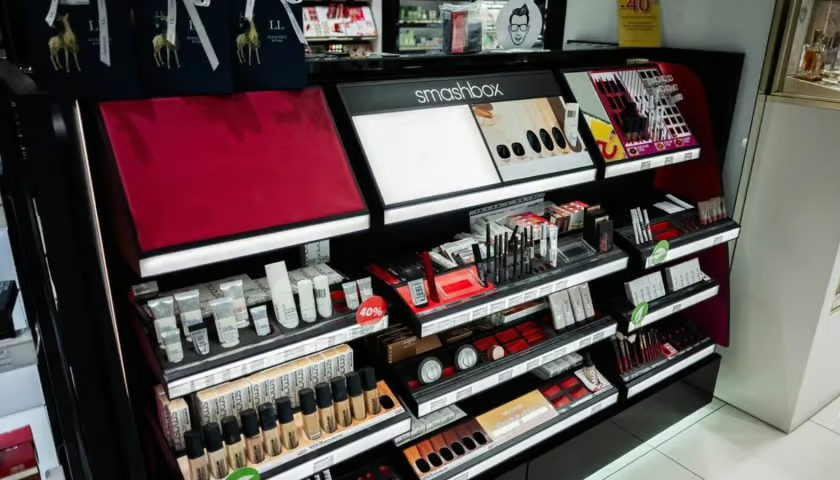
USA – Estée Lauder Companies (ELC) has abandoned plans to sell Too Faced, Smashbox and Dr. Jart+, choosing instead to restructure the labels, according to an internal document the company has confirmed.
Under the reorganization, Too Faced will move its headquarters from Los Angeles to New York and operate with a smaller team as part of ELC’s makeup cluster alongside Bobbi Brown and MAC; no new leader was named for Too Faced, though the cluster is led by president Lisa Sequino, who joined in May 2025.
Smashbox will remain in Los Angeles with a reduced staff, while Dr. Jart+ will stay in South Korea under Ye Jin Kim, vice president and global brand lead and creative, who has overseen the brand for more than four years.
CEO Stéphane de La Faverie stated, “As we looked ahead, one thing became clear: our brands have different strengths. consumer positioning, competitive dynamics, and growth opportunities, requiring tailored business models to help them accelerate innovation, strengthen consumer connections, and unlock long-term growth.”
ELC says it will adopt a leaner, more entrepreneurial operating model that mirrors the speed, agility, and mindset of successful independent beauty brands to move faster on innovation and strengthen consumer ties.
The reversal follows recent sale discussions: last month, ELC reportedly received final bids for the three brands, which had been shopped as a package deal before the strategy was adapted for potential buyers, with the combined value previously estimated in the low nine figures ( USD 100 million to USD 199.99 million).
The company also said last week that it expects to spend up to USD 1.75 billion on its restructuring program as part of its Profit Recovery and Growth Plan, far above the original November 2023 estimate of USD 500 million to USD 700 million, citing higher costs tied to job cuts, asset-related expenses, and terminated contracts.
The decision not to sell the labels comes amid other strategic reversals, including the collapsed merger talks with Puig: ELC and Puig confirmed discussions in March but announced the deal’s termination in May, with reports suggesting complications tied to Charlotte Tilbury and a renegotiation attempt by its founder.
Meanwhile, Tilbury sought to renegotiate her Puig buyout for about USD 1 billion, and a change-of-control clause in Puig’s contract could have allowed Tilbury to force the sale of her shares, creating potential multi-hundred-million-dollar exposure for ELC.
Speaking at a Deutsche Bank conference after the Puig talks fell through, de La Faverie said that if growth and profitability cannot be achieved at the right price point, a deal is not an option, explaining why that merger did not proceed.
Sign up to receive our email newsletters with the latest news updates and insights from Africa and the World HERE.

