Lush redefines cosmetics with 100% plastic-free mascara
As part of the brand’s wider Naked Collection, the mascara reflects Lush’s commitment to solid products that help minimize waste throughout the beauty routine.
USA – Lush is redefining sustainable beauty with its Naked Mascara, a fully plastic-free product that combines a vegan formula with packaging-free design.
In an industry that produces an estimated 120 billion packaging units each year, the mascara offers a zero-waste alternative without compromising performance.
Lush says its Naked line has saved more than 23 million pounds of plastic since 2005, which is roughly equivalent to 340 million plastic bottles.
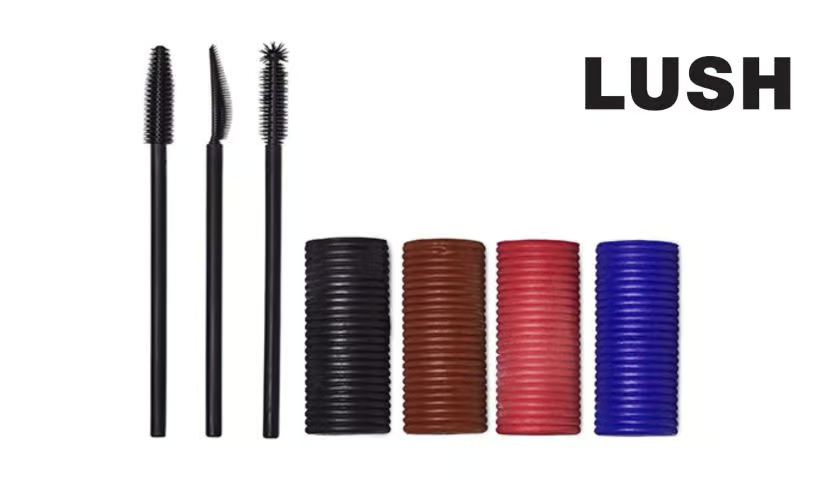
The mascara is designed to deliver tailored results and comes with three reusable wands: one for volume, one for definition, and one for separating and refining lashes. Each wand is made from non-toxic polypropylene with bio-based, eco-flex heads to ensure smooth and precise application.
The formula is made with nourishing butters and waxes that coat the lashes evenly while delivering rich, buildable pigment.
Available in Orca, Earth, Reef and Ocean, the mascaras are both vegan and cruelty-free.
The product is sold as a solid block in a packaging-free format.
To use it, users are advised to start with clean, dry fingers, lightly wet the tip of the brush, and swirl it inside the mascara block using very little water.
The brush should be moved around in circular motions until enough product is picked up, then applied to the lashes like any other mascara.
After use, the wand should be rinsed thoroughly and left to air dry, while the mascara block should be shaken to remove any remaining water and also left to dry.
The wand can then be placed in the insert part of the box to dry properly.
In the push for sustainability, Lush has also unveiled a new lineup of packaging-free shampoo bars, solid shower gels and limited-edition shower gummies designed to reduce what the brand calls unnecessary packaging waste during the summer season.
The company says it sold 37 million packaging-free products in 2025, representing 58% of all individual products sold, while 45% of its year-round range is now “naked.”
Since 2005, Lush claims it has prevented more than 15,000 tonnes of plastic from being used by removing packaging from its products.
The latest launch includes five limited-edition shower gummies, four solid shower gels and three shampoo bars, all sold without packaging.
Lush says the range is aimed at customers during festival season, summer holidays, and weddings abroad, when packaging-free formats can help reduce waste.
According to Lush, solid shampoo bars use less energy and water to make than liquid shampoos and are lighter to transport.
Each bar is said to equal three 250g bottles and to last an average of 50 washes, or up to 80, depending on hair length and storage conditions.
The company adds that, because bottled cosmetics contain a high water content, its solid products can include more natural, organic and Fairtrade ingredients, along with oils, absolutes and concretes for richer fragrances.
Cosmetic scientist and product inventor David Campbell said around 40% to 50% of a product’s cost can go on packaging, adding that removing it creates room for better ingredients.
Lush says its naked products are self-preserving and avoid synthetic preservatives by replacing water with solidifying ingredients such as Fairtrade cocoa butter.
It also says the format can reduce CO2 emissions by saving space in transit, claiming one truckload of shampoo bars equals 800,000 washes, compared with 15 trucks to move the same amount in liquid shampoo.
To make up for missing packaging, Lush says it provides clear in-store signage with ingredient and quantity information, and customers can also take the details home on a scale label sticker supplied in recyclable paper bags or greaseproof paper.
The company describes packaging waste as one of the cosmetics industry’s biggest sustainability problems, citing estimates that about 120 billion pieces of beauty packaging are discarded every year.
The new products are available in the UK and Ireland.
Co-founder Mark Constantine said packaging often costs more than the product itself, while consumers are left to deal with recycling something they did not want to buy in the first place.
Sign up to receive our email newsletters with the latest news updates and insights from Africa and the World HERE.