Jojoba oil emerges as multifunctional beauty essential amid rise of sustainable ingredients
This growth is fueled by rising demand for natural skincare ingredients, the popularity of vegan beauty products, and industrial applications such as bio-lubricants.
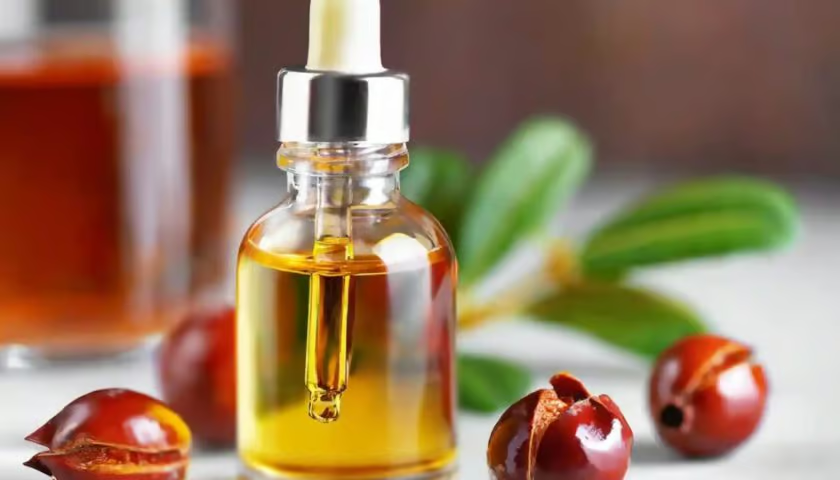
GLOBAL – Jojoba oil is maintaining its leading position in personal care as brands and consumers increasingly prioritize sustainable, multifunctional ingredients that deliver both performance and environmental benefits.
Derived from the seeds of Simmondsia chinensis, jojoba is technically a liquid wax ester that closely resembles human sebum, making it highly biocompatible, rapidly absorbed, and highly oxidative stable.
Clinically, jojoba delivers measurable improvements in skin hydration, radiance, elasticity, and sebum control.
In‑vivo testing by Vantage Personal Care shows around 80% better hydration, roughly 24–26% gains in elasticity and radiance, and about a 25% reduction in excess oil, making it a powerful multitasker for cleansers, moisturizers, serums, and masks.
In hair and scalp formulations, jojoba‑rich products deliver up to 108% improvement in shine, reduce wet‑combing force versus standard silicones, and enhance thermal protection by about 62%, while supporting scalp comfort.
For lips, it provides around 51% improvement in immediate hydration and markedly improves softness and nourishment.
Because it can passively enhance the penetration of actives such as retinol, it also allows brands to simplify formulas by replacing several single‑function ingredients with one multifunctional oil.
Jojoba fits naturally into “clean‑label” strategies: it is plant‑derived, typically cold‑pressed, and often available in organic and Cosmos‑approved grades.
Cultivation is concentrated in arid regions such as Arizona, California, Mexico, Argentina, and Peru, where jojoba’s drought tolerance reduces irrigation pressure and aligns with climate‑change‑driven water‑conservation goals.
Producers like Vantage emphasize precision drip irrigation, seasonal water shut‑offs, low‑till farming, and cold‑press extraction to minimize energy and preserve the oil’s natural composition.
By‑products such as defatted jojoba meal are upcycled into functional actives or used for soil improvement and energy feedstocks, further reducing waste.
Launches featuring “Simmondsia chinensis seed oil” have risen by about 41% from 2021 to 2025, with skincare leading recent applications and Europe accounting for half of new jojoba‑containing products between April 2025 and March 2026.
This growth reflects a broader shift toward barrier‑supportive, biomimetic ingredients and shorter INCI lists, where one performance‑driven natural oil can replace multiple function‑specific synthetics.
Innovations such as Stratasync Jojoba, a fermented, upcycled jojoba extract rich in peptides and amino acids, demonstrate how the ingredient can evolve into next‑generation actives.
A cream containing 1% Stratasync Jojoba increased collagen‑related signalling in facial skin by about 26% after 28 days, offering anti-ageing benefits.
Meanwhile, derivatives like Liponate Jojoba 20 and Iso Jojoba Butter provide texture modification, long‑lasting moisturization, and structural support, cementing jojoba as a backbone ingredient for sustainable, high‑performance personal‑care formulations.
According to a Grand View Research report, the global jojoba oil market size was estimated at USD 146.3 million in 2025 and is projected to reach USD 255.5 million by 2033, growing at a CAGR of 7.6% from 2026 to 2033.
Cosmetics and personal care dominate demand, while Asia-Pacific is the fastest-growing region.
Sign up to receive our email newsletters with the latest news updates and insights from Africa and the World HERE.